Showing posts with label resources. Show all posts

Tuesday, April 19, 2011

Paper Books or Digital Books?

As online learning begins to infiltrate "brick and mortar" institution of higher learning, book publishers are pushing out more digital texts.  While for profits institutions like Strayer often write their own texts, keeping costs low, the $150 textbook still lives on most college campuses.

Recently, the New York Times opined on the topic in an article "In a Digital Age, Students Still Cling to Paper Textbooks." While conventional wisdom suggests this tech-savvy generation of students would jump at the opportunity to do more 'stuff' digitally, this is not the case:
The explosion of outlets and formats — including digital books, which are rapidly becoming more sophisticated — has left some students bewildered. After completing the heavy lifting of course selection, they are forced to weigh cost versus convenience, analyze their own study habits and guess which texts they will want for years to come and which they will not miss. 
California Launches Digital Textbook Initiative


Last year, California launched a digital textbook initiative, led by Gov. Arnold Schwarzenegger, partially as a means of saving money [see Money magazine article]. He comments:


The textbooks are outdated, as far as I'm concerned, and there's no reason why our schools should have our students lug around these antiquated and heavy and expensive books," Schwarzenegger said this summer. "Digital textbooks are good not only for the students' achievement, but they're also good for the schools' bottom line. [Washington Post, October, 2009]
Digital texts can often cost half the price of traditional texts.  However, there is a tradeoff, as the student can only use the book for a limited time, often 180 days.  There also may be a learning curve by students (errr, faculty too) to fully understand and utilize the functionality of digital texts.  But as the screenshot below demonstrates, a digital text does provide more information than a traditional one.


With price being a major factor, the LA Times reports that free digital texts are making their way into the marketplace.  Part of the open source movement in education, new models are beginning to threaten the status quo which allow textbook companies to profit off of students.


I can remember the days of photocopying textbooks while in undergrad (now the librarian will arrest you if you do that), open source makes sense...education is expensive enough, why pay for a new edition? Except when MY book comes out, you NEED to buy that!

Thursday, April 7, 2011

One-to-one computing programs only as effective as their teachers

From http://www.eschoolnews.com/2010/02/16/11-programs-only-as-good-as-their-teachers/


Experts say 1-to-1 computing research needs to focus more on classroom practices—and less on equipment


A compilation of four new studies of one-to-one computing projects in K-12 schools identifies several factors that are key to the projects’ success, including adequate planning, stakeholder buy-in, and strong school or district leadership. Not surprisingly, the researchers say the most important factor of all is the teaching practices of instructors—suggesting school laptop programs are only as effective as the teachers who apply them.


The studies were published in January by the Journal of Technology, Learning, and Assessment, a peer-reviewed online journal from Boston College’s Lynch School of Education.


Sunday, April 3, 2011

FREE Online Tutoring for all UDC students through SMARTHINKING!

Did you know that all University of the District of Columbia students have access to FREE Online Tutoring through SMARTHINKING?


There are Math, Business, Nursing, and Writing subjects and over 1500 tutors to help you!


To access FREE tutoring:
1. Log into your Blackboard account
2. Select a course
3. Select "tools" on the left
4. Scroll down to click “Smarthinking login


If you have difficulties accessing your account, please call 202-274-5665 or email ejones@udc.edu. 
Once you are logged in, check out their Student Handbook here http://www.smarthinking.com/static/content/SMARTHINKING_Student_Handbook.pdf  and feel free to contact SMARTHINKING’s Customer Support Team at 888.430.7429 ext 1 or support@smarthinking.com. 


Tuesday, December 7, 2010

Teacher vs Learner Centered Learning

I'm typically the person in the room who uses words that end with '-centric', ego-centric & exo-centric are personal faves as well as user-centric. Before coming to UDC, I facilitated a yearlong blended learning fellowship [view their screencasts], I am often caught talking about learner-centric activities.

I often think that most educators 'teach they way they were taught'. When transitioning to an online setting, this is academic suicide. We must take the view of the learner when creating lectures, designing activities, and developing assessments.

Some of the literature uses the word "connectedness" to describe the paradigm shift away from teacher-centered instruction.

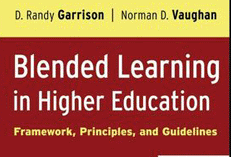
Screen shot 2010-04-23 at 12.38.57 PM.png One of the reasons I chose the book "Blended Learning in Higher Education" was to highlight the need for community and connectivity in an online environment.

More than a technology book, it delves into issues of pedagogy in the online classroom and provides a 3 point framework to follow called the "Community of Inquiry". [view PPT]

While not covered in the book, the term 'blended learning' does not embody the 'learner-centric' paradigm...it's teacher-centric:) I won't argue against it, but food for thought.

Taken from the publisher's website, the book has the following main areas:
  • Outlines seven blended learning redesign principles
  • Explains the professional development issues essential to the implementation of blended learning designs
  • Presents six illustrative scenarios of blended learning design
  • Contains practical guidelines to blended learning redesign
  • Describes techniques and tools for engaging students
From all accounts, fellows did find the book helpful. Moreover, they agreed that building a course in a blended manner was a great way to redesign their course; allowing for new ideas to be implemented into an existing curriculum. Here’s another nice article on the paradigm shift from instructional vs. learning paradigm.

Tuesday, October 12, 2010

7 Things ... A Great Resource from Educause

I've used Educause as reference in multiple workshops. Frequently, I find myself ushering faculty to their "7 Things" website, one of their Learning Initiatives.Picture 34.png

These 2 page primers are on emerging learning technologies and written FOR higher education professional and educators. There's nothing worst than a great resource which only discuss K-12 but not higher education perspectives.

Their latest topic: **Online Team-Based Learning** joins nearly 40 other briefs including: Collaborative Annotation, Second Life, FlipCams, and Personal Learning Environments.

All of the reports are free and worth the read.

Thursday, September 2, 2010

Accessing Library Resources

This lesson shows you how to get HELP or access the online library website on Blackboard.

Other Resources

media_1282766718890.png
1. Click on this link to view the ALDADIN library website.
2. Click on this link for HELP with Blackboard

Aladin

media_1282758337220.png

Aladin

media_1282758360597.png
You can search on various online journals and databases.

Searching E-Journals

media_1282758425420.png
Enter a term [in our case 'Nutrition'] and results will display on the screen. In most cases you can print or download the text directly from the site.

HELP TOOLS

media_1282767193876.png
If you have issues, a service desk is available 24 hours a day. You may also be able to have a LIVE CHAT. You can access this site directly at http://helpdesk.lrdudc.wrlc.org/

MORE HELP

media_1282767433848.png
Visit the Center for Academic Technology webpage [http://lrdudc.wrlc.org/cat/] for other Blackboard related help.

Wednesday, September 1, 2010

September Workshop Schedule

The document below links to the September workshop offerings from the Center for Academic Technology.  To view workshop descriptions, click here